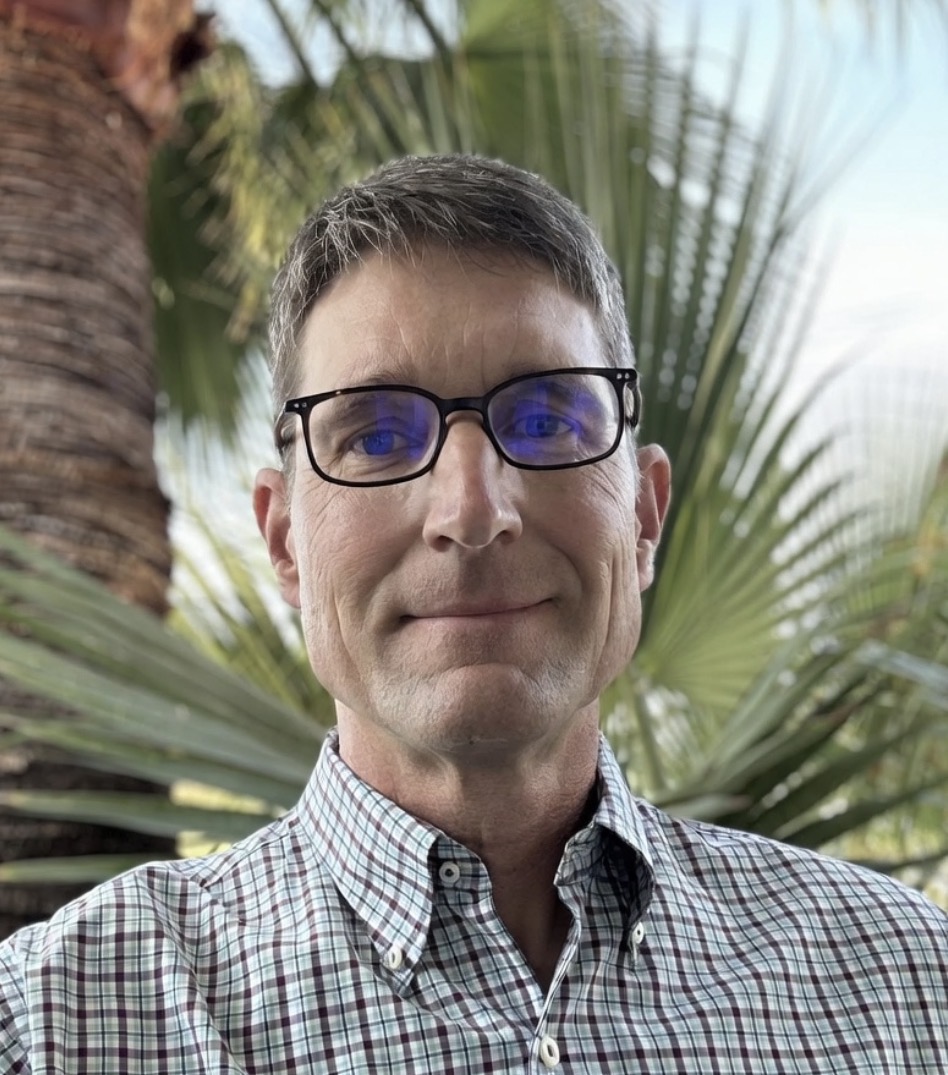
The Story
I built what medicine
hadn't gotten around to building.
My daughter was diagnosed with DDX3X syndrome — one of the leading genetic contributors to intellectual disability in females globally, yet still significantly underdiagnosed. She is nonverbal, and like every nonverbal individual with a complex, multi-system profile, she spent years in rooms where the people responsible for her care each understood one piece of her. Nobody held all of it. Nobody had the time, the data, or the infrastructure to hold eleven years of her simultaneously in mind.
I watched decisions get made about her life from incomplete pictures. I watched a misdiagnosis enter her record and stay there for years, shaping how clinicians understood her visual profile. I watched services go unclaimed because nobody had the bandwidth to find them. I watched caregiver transitions — each one a small loss of accumulated knowledge that existed nowhere except in someone's memory.
The tools to solve this didn't exist. So I built them.
"The gap is not in the person. It is in the infrastructure around them. I decided to build the infrastructure."
HerVoice is a private, AI-assisted longitudinal care intelligence system — built on a dedicated home server, never cloud-connected, capturing structured observations from every member of a care team and synthesizing them into a continuously updated portrait of who an individual is right now. It is the living version of a Letter of Intent. It is the system that doesn't forget, doesn't retire, and doesn't move on to the next patient.
The architecture is built for three phases: today, where it solves the coordination and continuity crisis facing nonverbal individuals and their families; near term, where AI trained on years of longitudinal individual data closes the gap between what a person understands and what they can express; and the future, where the richly characterized individual model becomes the foundation that makes robotic caregiving and ambient AI assistance genuinely useful — because the technology will finally have someone to work from.
Background
2004 —
Present
Esri
Business Development & Program Manager — AI Go-to-Market Strategy
Two decades at the world's leading geospatial intelligence company, most recently focused on integrating AI into go-to-market strategies for existing and new products and services. Deep background in remote sensing, GIS, and the intersection of spatial data with emerging technology. Esri's platform sits at the center of how governments, enterprises, and researchers understand the physical world — and AI is transforming what that understanding can do.
2016 —
2020
DDX3X Foundation
Founding Advisor — Patient Registry & Research Infrastructure
Joined the DDX3X Foundation in its first months — before any hope for a treatment existed. Appointed as an advisor to guide the Foundation's development and organize the patient cohort to raise the funds needed to generate the first mouse model for research. Led the evaluation of patient registry platforms and recommended the architecture that needed to be flexible enough to grow with the research direction, capture patient-supplied observations, scale to support data analytics, and store raw biometric data. Played a leading role in outreach to the cohort to encourage participation in the natural history study. Work contributed to funding the first DDX3X mouse embryo at the Sherr Lab at UCSF.
2024 —
Present
HerVoice Project
Founder & Builder
Designed and built HerVoice from the ground up — a privately hosted, AI-assisted longitudinal care intelligence system for nonverbal and minimally verbal individuals. The system runs on dedicated local hardware, is never cloud-connected, and captures structured observations from every member of a care team. Currently deploying v1.0 and developing the architecture for the Population-of-One intelligence layer, GraphRAG integration, and Zero-Knowledge Proof disclosure capabilities.